AI-Driven Manufacturing FAQ: Your Complete Question and Answer Guide
As manufacturing organizations worldwide embrace artificial intelligence to transform their operations, questions arise at every level—from foundational concepts to complex implementation challenges. Production managers evaluating predictive maintenance programs, engineers integrating AI into Manufacturing Execution Systems, and executives assessing ROI all face distinct but interconnected questions. This comprehensive FAQ addresses the most critical inquiries about AI in manufacturing, organized from beginner fundamentals through advanced implementation topics, drawing on real experiences from Industry 4.0 leaders across companies like General Electric, Honeywell, and Bosch.
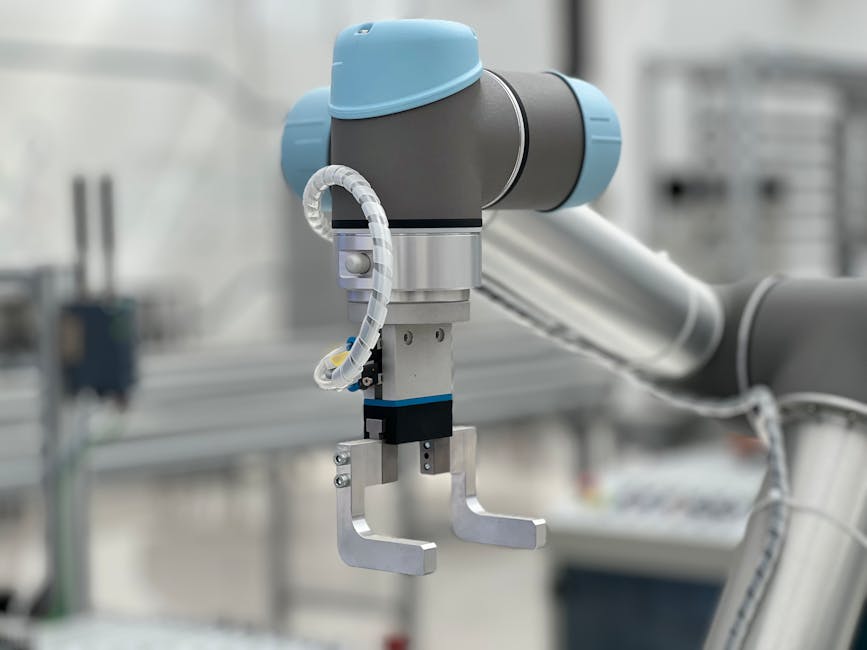
Understanding AI-Driven Manufacturing requires navigating both technological capabilities and operational realities. The questions and answers that follow reflect the actual concerns of manufacturing professionals managing Product Lifecycle Management systems, optimizing Overall Equipment Effectiveness, and maintaining supply chain resilience in an increasingly complex global environment. Whether you're just beginning to explore AI applications or refining advanced implementations, this guide addresses the questions that matter most to achieving measurable operational improvements.
Foundational Questions: Understanding AI in Manufacturing Context
What exactly is AI-Driven Manufacturing, and how does it differ from traditional automation?
AI-Driven Manufacturing represents a fundamental shift from rule-based automation to systems that learn from data and improve over time. Traditional automation executes predetermined instructions—a robotic arm repeating the same welding sequence, or a programmable logic controller following fixed logic. AI systems, in contrast, analyze patterns in production data, identify anomalies, predict outcomes, and adapt to changing conditions. In practical terms, this means a Quality Control Automation system using AI doesn't just check if a dimension falls within tolerance; it learns which upstream process variations predict quality issues and can recommend preventive adjustments before defects occur. This predictive and adaptive capability distinguishes AI from the deterministic automation that has defined manufacturing for decades.
Which manufacturing functions benefit most from AI implementation?
Predictive Maintenance AI consistently delivers the highest early ROI, reducing unplanned downtime by identifying equipment degradation before failure occurs. Digital Twin Technology enables process optimization by simulating production scenarios without disrupting actual operations. Supply chain functions benefit enormously from demand forecasting and inventory optimization algorithms that handle the complexity of multi-tier supplier networks. Quality control transforms through computer vision systems that inspect products with superhuman consistency and speed. Production planning systems using AI can optimize scheduling across conflicting constraints—material availability, equipment capacity, energy costs, delivery commitments—far beyond manual or traditional MRP capabilities. Process optimization in continuous manufacturing, from chemicals to food production, uses AI to maintain product consistency while minimizing waste and energy consumption.
What data infrastructure is required before implementing AI?
Successful AI implementation requires three data foundations. First, comprehensive data collection from production equipment through SCADA systems, sensors, and MES platforms—you cannot optimize what you cannot measure. Second, data historian capabilities that store time-series data with sufficient resolution and retention to train models; most predictive models require months or years of historical data to learn normal operating patterns and failure modes. Third, data labeling and contextualization that connects raw sensor readings to meaningful business outcomes like product quality, equipment failures, or production efficiency. Many manufacturers discover their existing data infrastructure captures telemetry but lacks the contextual information needed for AI—which batches corresponded to quality issues, which maintenance events were preventive versus reactive, which process changes were intentional versus drift. Building this semantic layer often represents the largest effort in AI preparation.
Implementation Questions: Planning and Executing AI Projects
Should we build AI capabilities in-house or partner with vendors?
This decision depends on strategic intent, existing capabilities, and application specificity. Commodity AI applications—predictive maintenance for standard equipment, basic demand forecasting, generic computer vision for defect detection—favor vendor solutions that provide faster time-to-value and leverage learning from multiple customers. Proprietary processes that represent competitive advantage justify internal development to protect intellectual property and maintain control. Most organizations adopt a hybrid approach: vendor platforms for infrastructure and common applications, combined with internal data science teams for process-specific optimization. The critical success factor is ensuring any vendor solution integrates properly with your MES, ERP, and PLM systems rather than creating data silos. When evaluating whether to pursue AI development partnerships, consider whether the vendor understands manufacturing operations deeply enough to configure solutions that respect production realities like changeovers, material traceability requirements, and regulatory compliance.
How do we calculate ROI for AI projects in manufacturing?
Manufacturing AI ROI calculations should include both hard savings and capability improvements. Hard savings include reduced downtime (hours saved multiplied by fully loaded production costs), quality improvement (defect reduction multiplied by scrap and rework costs), inventory reduction (working capital freed), energy optimization (consumption reduction), and labor efficiency (hours redirected to higher-value activities). Capability improvements include faster new product introduction, increased production flexibility, enhanced supply chain resilience, and improved regulatory compliance—harder to quantify but often strategically more valuable. The timing of returns varies significantly by application: predictive maintenance often shows positive ROI within 6-12 months, while Digital Twin implementations for process optimization may require 18-24 months to demonstrate full value. Critical to honest ROI calculation is including all implementation costs: data infrastructure, integration effort, change management, ongoing model maintenance, and the operational disruption during deployment.
What are the most common implementation failures and how can we avoid them?
The most frequent failure mode is insufficient attention to data quality. Models trained on incomplete, biased, or incorrectly labeled data produce unreliable outputs that erode operator trust. Prevention requires investing in data validation and cleansing before model development, not after deployment. The second common failure is deploying AI systems without adequate integration into operator workflows. A predictive maintenance system that generates alerts in a separate dashboard operators don't regularly check provides no value; the insights must integrate into existing computerized maintenance management systems. Third, many implementations fail to account for change management in production environments. Operators and technicians who understand their equipment intimately will reject AI recommendations they don't understand; successful deployments include explanation capabilities and transition periods where AI provides recommendations alongside human decision-making rather than replacing it immediately. Finally, many organizations underestimate ongoing model maintenance requirements. Production processes change through Engineering Change Orders, equipment ages, supplier materials vary—models must be continuously retrained and validated or their performance degrades.
Advanced Technical Questions: Optimization and Scaling
How do we handle the edge computing versus cloud computing decision for manufacturing AI?
This decision balances latency requirements, data volume, connectivity reliability, and data sovereignty concerns. Applications requiring real-time responses—quality inspection on high-speed production lines, robotic guidance, immediate safety interventions—must run at the edge because network latency makes cloud processing impractical. Edge deployment also reduces the data volume transmitted; sending raw sensor data from hundreds of IoT devices to the cloud becomes prohibitively expensive, while edge processing can perform initial analysis and transmit only summarized results or anomalies. Connectivity reliability drives edge deployment in facilities where internet outages cannot interrupt production. Cloud computing excels at training complex models on historical data, performing analysis across multiple facilities, and running optimization algorithms that consider enterprise-wide constraints. The emerging best practice uses hybrid architectures: edge devices perform real-time inference using lightweight models, while cloud systems handle model training, cross-site analytics, and complex optimization, periodically updating edge models with improved versions.
How do we maintain AI model performance as production processes evolve?
Model maintenance requires systematic monitoring and retraining processes. Implement statistical process control for model predictions themselves, tracking metrics like prediction accuracy, confidence distributions, and drift in input feature distributions. When these metrics indicate degradation, investigation determines whether process changes, equipment wear, material variations, or other factors have invalidated model assumptions. Establish retraining schedules appropriate to process stability—stable processes might require quarterly retraining, while dynamic environments need monthly or even continuous learning approaches. Maintain versioned datasets that capture process state at different times, enabling models to be retrained on relevant historical periods. Document all Engineering Change Orders and correlate them with model performance changes to understand which process modifications require model updates. For critical applications, maintain shadow models trained on recent data running in parallel with production models, comparing their performance to determine when switching to updated versions is justified. The goal is not perfect models but rather systems that degrade gracefully and can be refreshed before performance impacts operations.
How do we integrate AI with existing MES and ERP systems without disrupting production?
Integration requires careful API design and phased deployment. Modern Manufacturing Execution Systems typically provide REST APIs or OPC UA interfaces for external systems, but legacy MES installations may require middleware to expose data and accept AI-generated recommendations. The integration architecture should treat the AI system as a recommendation engine that proposes actions for validation by MES business logic rather than directly controlling production equipment—this provides a safety layer and maintains audit trails. Deployment should follow a crawl-walk-run approach: first, deploy AI in monitoring mode where it generates predictions logged but not acted upon, allowing validation against actual outcomes; second, shadow mode where AI recommendations are presented to operators who decide whether to follow them; third, automated execution with human oversight; finally, full automation with exception-based human intervention. This progression builds confidence, identifies edge cases, and allows operators to develop trust in the system. Throughout integration, maintain rollback capabilities so production can continue if AI systems fail. Never create dependencies where AI system unavailability halts production unless the AI addresses a safety-critical function where stopping is appropriate.
Strategic Questions: Long-term AI Vision and Transformation
How does AI-Driven Manufacturing support sustainability and ESG goals?
AI contributes to sustainability across multiple dimensions. Energy optimization algorithms reduce consumption by identifying inefficient operating patterns and optimizing equipment utilization—manufacturers have achieved 10-20% energy reductions through AI-driven process optimization. Quality improvement directly reduces waste by minimizing scrap and rework. Predictive maintenance extends equipment life and reduces the waste associated with premature replacement. Smart Factory Optimization enables more efficient material usage through precise process control and reduced variability. Supply chain AI improves logistics efficiency, reducing transportation emissions. Digital twins enable simulation-based optimization that would previously require physical experimentation, reducing material consumption during process development. For ESG reporting, AI systems provide granular tracking of resource consumption, emissions, and waste generation with the traceability increasingly required by regulations and stakeholders. The challenge is ensuring these sustainability benefits are measured and reported rather than remaining invisible side effects of efficiency improvements.
What skills and organizational structures are needed to sustain AI capabilities?
Successful AI-driven manufacturing requires hybrid teams combining domain expertise with data science capabilities. Manufacturing engineers who understand processes deeply must work closely with data scientists who understand modeling techniques; neither can succeed alone. Organizations typically need data engineers who build and maintain pipelines from shop floor to analytics environments, data scientists who develop and train models, ML engineers who deploy and monitor production systems, and domain experts who validate results and interpret edge cases. Beyond technical roles, change management capabilities become critical to drive adoption and manage the cultural shift from experience-based to data-driven decision-making. Organizationally, successful structures embed data scientists within manufacturing operations rather than isolating them in corporate IT, ensuring they understand operational constraints and build trust with plant personnel. Training production staff in AI literacy—understanding what AI can and cannot do, how to interpret model outputs, when to trust versus question recommendations—proves as important as technical training. Leadership must set expectations that AI adoption is a multi-year journey requiring sustained investment, not a one-time project.
How will AI-Driven Manufacturing evolve over the next five years?
Several trends will shape the evolution. Edge AI capabilities will expand as specialized processors enable more sophisticated models to run on factory floor devices, reducing dependence on connectivity. Autonomous manufacturing systems will emerge where AI manages not just individual processes but coordinates entire value streams from supplier management through production to logistics. Generative AI will transform design and engineering, automatically creating and optimizing product designs, manufacturing processes, and plant layouts. Digital twins will become more sophisticated, incorporating not just physical processes but human factors, market dynamics, and supply chain complexities into integrated simulations. Explainable AI will improve, addressing the current black-box problem and enabling operators to understand and trust AI reasoning. Industry-specific foundation models trained on vast manufacturing datasets will emerge, reducing the data requirements for individual implementations. Regulatory frameworks will mature, providing clearer guidance on validation, liability, and transparency requirements for AI in manufacturing. Organizations that build foundational capabilities now—data infrastructure, technical skills, cultural readiness—will be positioned to leverage these advances, while those waiting for maturity may find themselves increasingly uncompetitive.
Conclusion: From Questions to Action
The questions addressed in this FAQ reflect the real journey of manufacturing organizations embracing artificial intelligence—from initial curiosity through implementation challenges to strategic transformation. While AI-driven manufacturing introduces complexity, the competitive imperative is clear: organizations that successfully integrate AI into Product Lifecycle Management, Manufacturing Execution Systems, quality control, and supply chain operations achieve measurable advantages in cost, quality, flexibility, and innovation speed. The key is approaching AI adoption systematically, building foundational capabilities in data and skills, starting with high-value use cases, and scaling based on demonstrated results rather than hype. As your organization moves from questions to implementation, partnering with providers who understand both manufacturing operations and AI capabilities through comprehensive Intelligent Automation Solutions can accelerate your journey while avoiding common pitfalls. The future of manufacturing belongs to organizations that combine operational excellence with data-driven intelligence—those willing to ask hard questions and act on the answers.


Comments
Post a Comment