Production Line Automation: The Ultimate Resource Roundup for 2026
Navigating the rapidly evolving landscape of Production Line Automation requires more than just theoretical knowledge—it demands access to the right tools, frameworks, communities, and learning resources. As manufacturing facilities transition toward smarter, more adaptive operations, plant managers and automation engineers need curated resources that cut through the noise. This comprehensive roundup assembles the essential tools, reads, and communities that are actively shaping how we implement automation across production environments today.
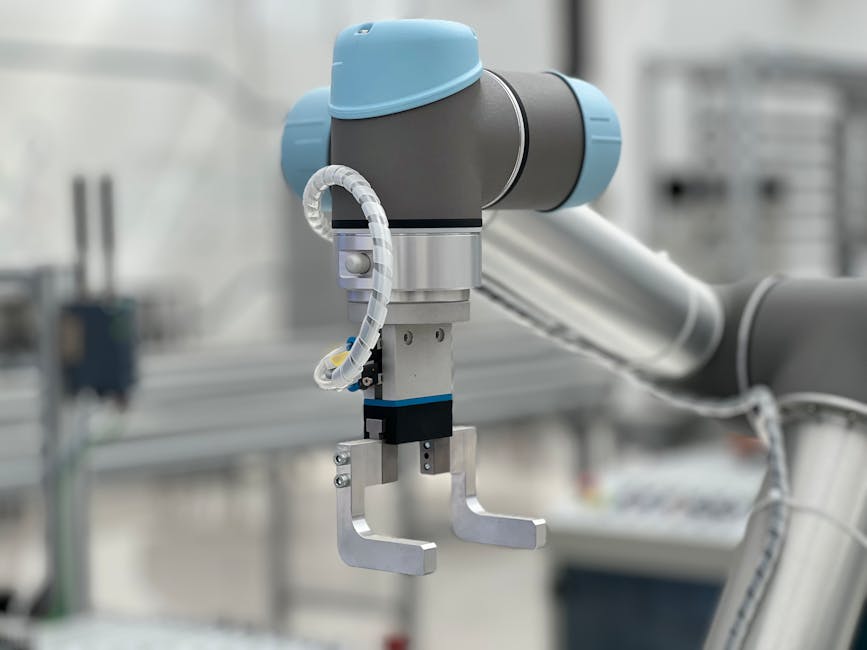
Whether you're optimizing OEE metrics at an existing facility or designing a greenfield smart factory, understanding the current ecosystem of Production Line Automation resources is critical. This roundup draws from real-world implementations across companies like Siemens, ABB, and Rockwell Automation, highlighting the platforms and knowledge bases that drive measurable improvements in production throughput and cycle time reduction.
Essential Software Platforms and Automation Tools
The foundation of any successful Production Line Automation initiative rests on selecting the right software stack. Manufacturing Execution Systems (MES) continue to serve as the central nervous system for production operations. Platforms like Siemens Opcenter and Rockwell Automation's FactoryTalk ProductionCentre offer comprehensive visibility into shop floor operations, enabling real-time adjustments based on machine performance data. These systems integrate directly with ERP platforms while providing granular control over work-in-progress tracking and material flow optimization.
For facilities focused on Smart Factory Integration, industrial IoT platforms have become indispensable. ABB Ability and Honeywell Forge stand out as enterprise-grade solutions that aggregate sensor data across production lines, converting raw machine telemetry into actionable intelligence. These platforms excel at condition monitoring and enable predictive maintenance workflows that significantly reduce unplanned downtime. Their edge computing capabilities ensure low-latency data processing even in bandwidth-constrained environments.
Digital twin modeling has transitioned from experimental to essential. Tools like Siemens' Process Simulate and ANSYS Twin Builder allow engineers to create virtual replicas of production lines, testing process changes and new equipment configurations before committing capital expenditure. These simulation environments dramatically reduce commissioning time and de-risk major automation upgrades by identifying bottlenecks and integration issues in virtual space.
Robotic Process Automation and Machine Vision
When evaluating Robotic Process Automation solutions for production environments, Fanuc's CRX collaborative robots and ABB's YuMi series consistently deliver ROI in assembly and material handling applications. The ecosystem around these platforms—including vision systems, end-effector tooling, and programming environments—has matured to the point where deployment cycles have shortened from months to weeks for standard use cases.
Machine vision frameworks form a critical component of quality control automation. Cognex VisionPro and Keyence's CV-X series provide the image processing capabilities needed for high-speed inspection tasks, while newer entrants leverage deep learning models for defect detection in complex visual scenarios. Integrating these vision systems with line controllers enables real-time quality gates that prevent defective products from progressing through downstream operations.
Open-Source Automation Frameworks
For teams seeking flexibility and customization, open-source frameworks offer compelling alternatives to proprietary platforms. Node-RED has emerged as a powerful tool for rapid prototyping of IIoT workflows, with industrial-specific nodes that simplify integration with PLCs and SCADA systems. Eclipse 4diac provides an IEC 61499-compliant distributed control framework suitable for modular production systems, while OpenPLC enables cost-effective controller implementations using standard industrial programming languages.
Learning Resources and Industry Publications
Staying current with Production Line Automation methodologies requires engagement with specialized publications and research outlets. Control Engineering and Manufacturing Engineering magazines consistently publish practical case studies that detail automation ROI and implementation challenges at named facilities. Their technical depth surpasses generic business publications, offering specifics on PLC programming approaches, network architecture decisions, and integration patterns.
The International Society of Automation (ISA) publishes standards and technical reports that define best practices for industrial automation. ISA-95 remains the reference architecture for enterprise-control system integration, while ISA-88 provides the batch control framework used across process industries. These documents aren't light reading, but they establish the common language used by controls engineers worldwide.
For those designing or upgrading automated facilities, exploring advanced AI development platforms can unlock capabilities in predictive quality control and dynamic production scheduling that traditional rule-based systems cannot match.
Professional Communities and Forums
The value of peer networks in automation cannot be overstated. The PLCTalk forum hosts decades of collective troubleshooting knowledge, with active discussions on everything from Rockwell Logix programming to fieldbus diagnostics. Engineers regularly share ladder logic snippets, HMI design patterns, and vendor-neutral advice on system integration challenges.
LinkedIn groups like "Industrial Automation Professionals" and "Smart Manufacturing" facilitate higher-level strategic discussions. These communities surface emerging trends in Predictive Maintenance approaches and digital transformation initiatives, often featuring contributions from automation vendors and systems integrators. The Manufacturing Leadership Council offers both online discussion forums and in-person events where plant leadership shares operational metrics and lessons learned from large-scale automation deployments.
Reddit's r/PLC and r/IndustrialAutomation subreddits provide more informal, candid perspectives on vendor products and implementation realities. The community quickly identifies problematic product releases, shares workarounds for common issues, and offers career guidance for automation professionals at all experience levels.
Training and Certification Programs
Formal training remains essential for building competency in Production Line Automation technologies. Rockwell Automation's Learning Services delivers hands-on courses covering Studio 5000 programming, motion control, and process visualization that align with their product ecosystem. Siemens offers similar training paths through their SITRAIN digital learning platform, with modules spanning TIA Portal programming, industrial networking, and digital twin creation.
Vendor-neutral certifications like the ISA Certified Automation Professional (CAP) and Certified Control Systems Technician (CCST) validate broad technical competence and are increasingly required by employers. These certifications assess understanding of control theory, instrumentation, process dynamics, and industrial networking—knowledge that transcends any single vendor platform.
For specialized skills in machine learning applications for manufacturing, Coursera and edX offer university-backed courses that bridge data science and industrial operations. MIT's MicroMasters in Supply Chain Management includes modules on manufacturing analytics and optimization that provide theoretical grounding for implementing adaptive production scheduling systems.
Frameworks and Methodologies
Successful Production Line Automation projects follow structured methodologies that manage technical complexity and organizational change. The ANSI/ISA-95 enterprise-control system integration model provides the layered architecture framework that separates business planning systems from real-time control, establishing clear integration points and data exchange patterns. Implementing production systems aligned with this model ensures scalability and maintainability as operations grow.
Lean manufacturing principles continue to inform automation design decisions. Value stream mapping exercises identify non-value-adding activities that automation should eliminate rather than simply accelerate. The concept of jidoka—automation with human intelligence—reminds us that effective automation includes exception handling and operator intervention pathways for situations that exceed programmed parameters.
The MES implementation framework developed by MESA International breaks deployment into manageable phases: requirements definition, gap analysis, system design, integration, testing, and cutover. This structured approach reduces project risk and ensures that manufacturing execution systems deliver the targeted visibility and control capabilities without disrupting ongoing production.
Emerging Tools and Experimental Platforms
At the bleeding edge, several experimental platforms warrant attention from forward-looking automation teams. Process mining tools like Celonis and UiPath Process Mining apply data science techniques to MES and ERP event logs, revealing actual production flows and identifying automation opportunities that aren't apparent from standard reporting. These insights drive targeted improvement initiatives that deliver faster ROI than broad-spectrum automation efforts.
Low-code automation platforms are beginning to address the industrial space. Mendix and OutSystems now offer industrial IoT connectors and OPC-UA integrations that enable manufacturing IT teams to build custom MES extensions and operator applications without traditional software development cycles. While not suitable for real-time control, these platforms accelerate the delivery of analytics dashboards and workflow automation tools that augment production operations.
Reinforcement learning frameworks like OpenAI Gym are being adapted for production optimization experiments. Research teams use these environments to train agents that optimize production scheduling, energy consumption, and material flow across complex manufacturing networks. While most applications remain experimental, early industrial pilots show promise in dynamic job shop scheduling scenarios where traditional optimization approaches struggle with combinatorial complexity.
Conclusion
The resources compiled in this roundup represent entry points into the multifaceted world of Production Line Automation. From battle-tested MES platforms to emerging AI-driven optimization frameworks, the tooling landscape continues to expand in both capability and accessibility. Success in automation initiatives stems not just from selecting the right tools, but from engaging with the communities and knowledge bases that contextualize their application in real production environments. As manufacturing continues its digital transformation journey, leveraging comprehensive Intelligent Automation Solutions across planning, execution, and optimization layers will separate industry leaders from followers. The frameworks and resources outlined here provide the foundation for building that competitive advantage systematically and sustainably.


Comments
Post a Comment