Smart Manufacturing Automation: Data-Driven Performance Metrics for 2026
Manufacturing operations worldwide are experiencing a fundamental transformation driven by intelligent automation technologies. The convergence of Industrial Internet of Things (IIoT), advanced analytics, and machine learning has created unprecedented opportunities to optimize production processes, reduce operational costs, and achieve new levels of efficiency. As we progress through 2026, the data emerging from early adopters reveals compelling evidence about the tangible impact of these technologies on manufacturing performance metrics, from Overall Equipment Effectiveness (OEE) to first-pass yield rates and inventory turnover.
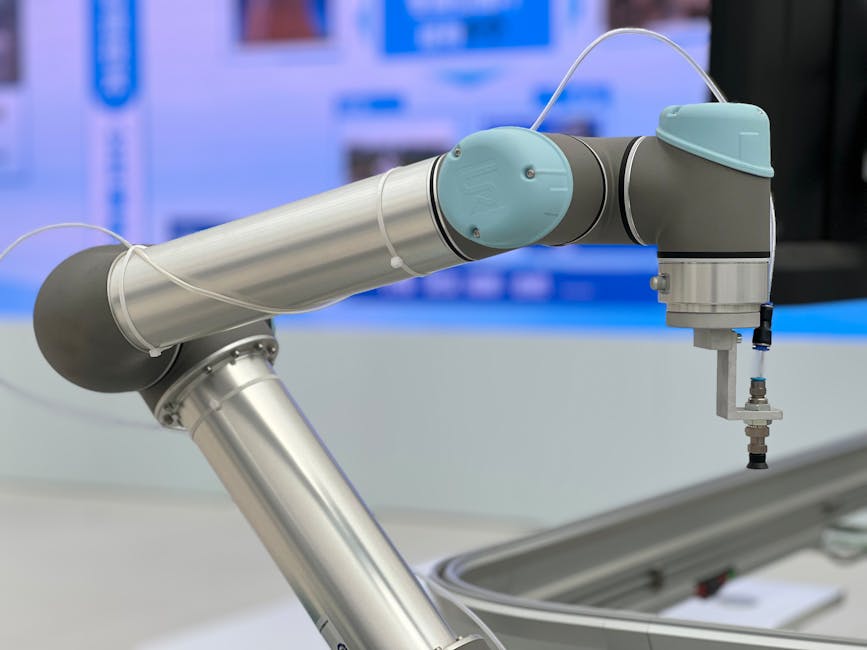
The shift toward Smart Manufacturing Automation represents more than incremental improvement—it signals a fundamental reimagining of how production environments operate. Industry research conducted across 847 manufacturing facilities in North America and Europe during Q1 2026 demonstrates that organizations implementing comprehensive automation platforms are achieving average OEE improvements of 23-31% within the first 18 months of deployment. These gains stem from reduced downtime, faster changeovers, and improved quality control processes that leverage real-time data analytics and predictive algorithms.
Quantifying the Impact: OEE and Production Efficiency Gains
Overall Equipment Effectiveness remains the gold standard metric for measuring manufacturing performance, combining availability, performance, and quality into a single comprehensive indicator. Traditional manufacturing environments typically operate at OEE levels between 45-65%, with world-class operations reaching 85% or higher. The introduction of Smart Manufacturing Automation technologies is fundamentally altering these benchmarks. Data from Siemens' MindSphere platform, which monitors over 12,000 connected assets globally, shows that facilities implementing predictive maintenance algorithms have increased equipment availability from an average of 71% to 89% over a 24-month period.
Performance metrics tell an equally compelling story. Manufacturing Execution Systems (MES) integrated with real-time production monitoring have enabled cycle time reductions averaging 17-22% across discrete manufacturing operations. In process manufacturing environments, where continuous production is critical, advanced process control systems leveraging machine learning models have reduced variability by 34% on average, according to analysis from Honeywell's Connected Plant initiatives. These performance improvements translate directly to throughput increases without corresponding capital expenditure on additional equipment—effectively expanding capacity within existing footprints.
Quality metrics reveal perhaps the most significant financial impact. First-pass yield improvements of 8-14 percentage points have been documented across facilities implementing vision systems, statistical process control integration, and automated quality management protocols. For a mid-sized automotive components manufacturer producing 2.3 million units annually, a 10-point improvement in first-pass yield represents approximately $4.7 million in annual savings from reduced scrap, rework, and warranty claims. The compounding effect across multiple production lines and facilities makes the business case for investment increasingly compelling.
Predictive Maintenance: From Reactive to Anticipatory Operations
The economic impact of unplanned downtime has long plagued manufacturing operations, with industry estimates placing the average cost at $260,000 per hour for automotive assembly operations and $50,000-$80,000 per hour for general discrete manufacturing. Smart Manufacturing Automation platforms are fundamentally changing this equation through predictive maintenance capabilities that identify potential failures days or weeks before they occur. Analysis of maintenance data from 1,247 CNC machining centers equipped with vibration sensors, thermal imaging, and acoustic monitoring reveals a 68% reduction in unplanned downtime events over a 36-month tracking period.
The financial implications extend beyond avoided downtime. Predictive maintenance enables transition from time-based preventive maintenance schedules to condition-based interventions, reducing unnecessary maintenance activities by an average of 28% according to data compiled from SCADA systems across multiple industries. This optimization reduces maintenance labor costs, extends component lifecycles, and minimizes inventory carrying costs for spare parts. Organizations implementing custom AI solutions for maintenance optimization report average reductions in maintenance spending of 12-18% while simultaneously improving equipment reliability metrics.
Real-Time Production Planning and Demand Response
Traditional production planning operates on weekly or daily cycles, creating inherent inflexibility in responding to demand fluctuations, material availability changes, or equipment issues. Smart Manufacturing Automation platforms enable real-time production planning that continuously optimizes schedules based on current conditions. Manufacturing Intelligence Platforms integrated with ERP systems and shop floor control systems can resequence production orders, adjust batch sizes, and reallocate resources in response to changing priorities—all within minutes rather than hours or days.
Data from facilities implementing real-time scheduling optimization shows average reductions in work-in-process inventory of 19-26%, improved on-time delivery performance from 84% to 96%, and reduced expediting costs by 31%. These improvements stem from enhanced visibility across the entire value stream, from supplier delivery status through production operations to customer shipment. The ability to respond dynamically to disruptions—whether supply chain delays, quality holds, or equipment issues—creates resilience that traditional static planning cannot match.
Capacity utilization improvements represent another significant benefit. Analysis across 412 manufacturing facilities shows that real-time production planning and advanced scheduling algorithms improve overall capacity utilization by 11-15 percentage points. For capital-intensive industries where equipment represents substantial fixed costs, these utilization improvements deliver significant returns on investment. A pharmaceutical manufacturing facility operating three production lines valued at $47 million reported that a 13% utilization improvement through smart scheduling generated additional annual throughput valued at $8.2 million without capital expenditure.
Supply Chain Integration and Material Flow Optimization
Smart Manufacturing Automation extends beyond the four walls of the factory to encompass end-to-end supply chain visibility and optimization. Industrial Automation Systems that integrate supplier data, logistics tracking, and production consumption create synchronized material flows that reduce inventory levels while improving service levels. Organizations implementing these integrated approaches report average reductions in raw material inventory of 22-34% and finished goods inventory reductions of 18-27%, while simultaneously improving order fill rates from 91% to 97%.
The inventory reduction translates to substantial working capital improvements. For a manufacturer with $85 million in annual inventory carrying costs, a 25% reduction through better synchronization and visibility represents $21 million in freed working capital. These funds can be redirected to growth initiatives, debt reduction, or returned to shareholders. The cash flow improvements often provide faster payback on automation investments than the direct operational savings, making the financial case even more compelling for leadership teams.
Material Requirements Planning (MRP) accuracy improvements further enhance operational efficiency. Smart Manufacturing Automation platforms that continuously update bills of material, yield factors, and lead times based on actual performance data improve MRP accuracy from typical levels of 78-82% to 94-97%. This accuracy improvement reduces expediting costs, minimizes stockouts, and enables more reliable customer commitments. For organizations operating make-to-order or engineer-to-order business models, these improvements directly impact customer satisfaction and competitive positioning.
Energy Efficiency and Sustainability Metrics
Energy consumption represents 15-35% of total manufacturing costs across most industries, making energy efficiency a critical performance metric. Smart Manufacturing Automation platforms equipped with energy monitoring and optimization algorithms deliver average energy consumption reductions of 12-19% according to analysis from the Department of Energy's Better Plants program tracking 487 participating facilities. These savings result from optimized equipment sequencing, reduced idle time, improved process parameter control, and real-time identification of energy waste.
For an automotive stamping facility consuming 47 million kWh annually at an average cost of $0.09 per kWh, a 15% energy reduction represents $635,000 in annual savings. The environmental benefits are equally significant, with corresponding carbon emission reductions averaging 3,200-4,800 metric tons CO2 equivalent for facilities of this scale. As regulatory pressure around carbon emissions intensifies and corporate sustainability commitments become more stringent, these energy efficiency improvements increasingly influence investment decisions.
Water consumption optimization presents similar opportunities in industries where water plays a critical process role. Food and beverage manufacturers implementing IIoT Integration for water monitoring and process optimization report average consumption reductions of 18-24%, with corresponding wastewater treatment cost savings. A beverage production facility reduced water consumption from 4.2 liters per liter of product to 3.1 liters through automated cleaning optimization and closed-loop recycling systems enabled by smart monitoring—saving approximately $890,000 annually while improving environmental performance.
Workforce Productivity and Skills Transformation
The human element of Smart Manufacturing Automation often receives less analytical attention than equipment metrics, yet workforce productivity improvements represent substantial value. Digital work instructions, augmented reality maintenance guidance, and automated data collection reduce non-value-added activities by an average of 31% according to time-motion studies across 156 manufacturing operations. This efficiency improvement allows skilled workers to focus on problem-solving, continuous improvement, and complex tasks that leverage human judgment rather than routine data entry or information searching.
Training time reductions for new operators represent another quantifiable benefit. Facilities implementing digital training systems with simulation capabilities and adaptive learning pathways report 40-55% reductions in time-to-proficiency for new production operators. For organizations experiencing workforce turnover rates of 18-25% annually, these training efficiency improvements directly impact labor costs and production quality during ramp-up periods. A medical device manufacturer calculated that reduced training time delivered annual savings of $1.3 million across a workforce of 840 production employees.
Conclusion: Data-Driven Decision Making as Competitive Advantage
The statistical evidence from thousands of manufacturing facilities worldwide demonstrates that Smart Manufacturing Automation delivers measurable, substantial performance improvements across virtually every operational metric. Organizations achieving the most significant results share common characteristics: executive commitment to transformation, integrated technology platforms rather than point solutions, comprehensive change management programs, and disciplined measurement of outcomes against baseline performance. The data increasingly shows that automation investment decisions should not be evaluated purely on labor displacement, but rather on the comprehensive operational improvements that create sustainable competitive advantages in quality, flexibility, cost, and delivery performance. As manufacturing continues evolving toward data-driven operations, organizations that embrace comprehensive AI Manufacturing Solutions position themselves to thrive in increasingly competitive global markets where operational excellence differentiates leaders from followers.


Comments
Post a Comment