AI Vibe Coding FAQ: Answering Your Questions from Basics to Advanced
As artificial intelligence reshapes the software development profession, developers at every experience level are grappling with fundamental questions about how this technology changes their work, their skills, and their careers. The paradigm shift from traditional syntax-focused coding to intent-driven development raises concerns about job security, quality control, learning paths, and architectural best practices. Whether you're a curious beginner wondering if you should still learn to code or a seasoned architect evaluating AI integration strategies, understanding the practical realities behind the hype is essential.
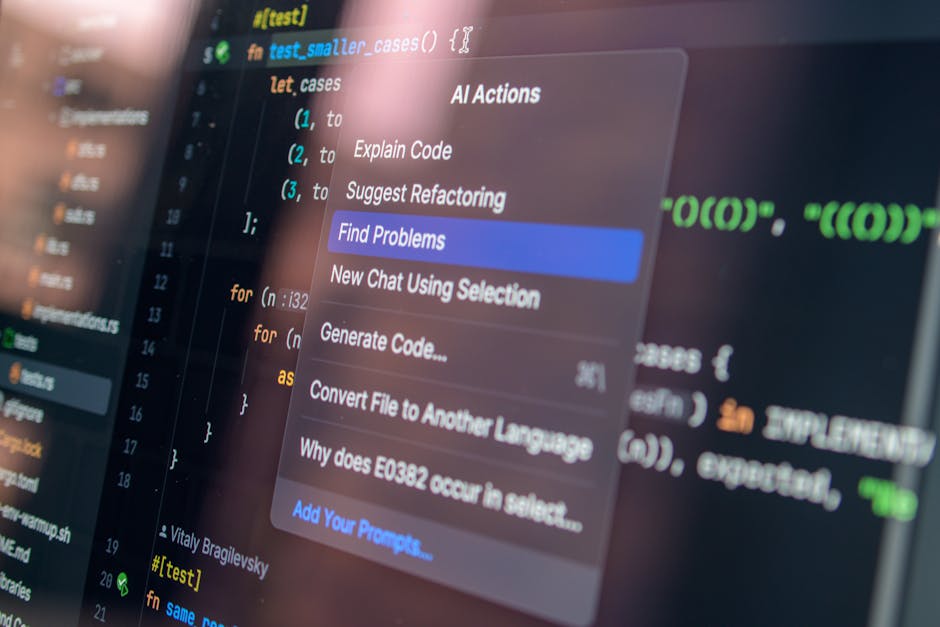
This comprehensive FAQ addresses the most common and critical questions surrounding AI Vibe Coding, drawing from real-world implementation experiences across startups, enterprises, and open-source projects. These answers reflect not theoretical possibilities but practical insights from developers who have integrated AI assistance into production workflows, encountered its limitations, and developed strategies to maximize benefits while mitigating risks.
Foundational Questions for Beginners
What exactly is AI Vibe Coding?
AI Vibe Coding represents a development approach where programmers express their intent and desired outcomes in natural language or high-level descriptions, allowing AI systems to generate implementation code. Rather than manually typing every function, loop, and conditional statement, developers describe what they want to achieve, review AI-generated suggestions, and refine the output through iteration. This methodology prioritizes conceptual understanding and architectural thinking over memorization of syntax and API details.
Should I still learn traditional programming if AI can write code?
Absolutely. AI Vibe Coding enhances rather than replaces programming knowledge. Developers need to understand algorithms, data structures, system design, and code quality principles to effectively evaluate AI-generated suggestions. Without this foundation, you cannot distinguish good code from subtly flawed implementations, recognize security vulnerabilities, or architect systems that scale. Think of AI as a powerful amplifier of existing skills rather than a substitute for learning them.
Which programming languages work best with AI coding assistants?
AI models demonstrate strongest performance with widely-used languages that have extensive training data: Python, JavaScript, TypeScript, Java, C#, and Go. These languages benefit from millions of open-source examples that informed model training. Less common languages or domain-specific frameworks may receive less accurate suggestions. However, the quality gap narrows as newer models incorporate broader training datasets and better generalization capabilities.
Do I need expensive subscriptions to get started?
Not necessarily. While commercial tools like GitHub Copilot and Tabnine offer premium features, several free alternatives provide substantial value. Visual Studio Code's built-in IntelliCode offers basic AI-powered completions at no cost. Open-source models like CodeLlama can run locally without subscription fees, though they require some technical setup. Many paid tools also offer free tiers or educational licenses for students and open-source contributors.
Implementation and Workflow Questions
How do I integrate AI coding tools into my existing development environment?
Most AI coding assistants install as IDE extensions or plugins. For Visual Studio Code, search the marketplace for your chosen tool and install with one click. JetBrains IDEs follow similar patterns through their plugin repositories. After installation, you'll typically authenticate with your account, configure preferences like suggestion frequency and privacy settings, then restart your IDE. The tools activate automatically as you type, displaying suggestions inline or in sidebar panels.
What's the typical productivity improvement from AI Vibe Coding?
Productivity gains vary significantly based on task type and developer experience. Repetitive tasks like writing boilerplate code, test cases, or CRUD operations often see 40-60% time reductions. Complex algorithmic work or novel architectural challenges show more modest improvements, perhaps 15-25%. Individual variation is substantial; some developers report doubling their output while others find marginal benefits. The key is identifying which aspects of your workflow benefit most from AI assistance.
How should I structure my prompts or comments for best results?
Effective prompts are specific, contextual, and include examples when possible. Instead of "create user function," write "create an async function that accepts a user ID, fetches user data from PostgreSQL, validates the email format, and returns a user object or throws a NotFoundError." Include type information, error handling requirements, and performance constraints. The more context you provide about your codebase conventions and requirements, the more aligned the generated code will be with your needs.
Can AI coding tools work with my company's proprietary codebase?
This depends on the tool and your security requirements. Cloud-based assistants like GitHub Copilot send code snippets to external servers for processing, which may violate confidentiality agreements or regulatory requirements. Self-hosted alternatives like Tabnine Enterprise or fine-tuned open-source models keep data within your infrastructure. For those building secure enterprise systems, leveraging custom AI development platforms ensures proprietary code never leaves your controlled environment.
Code Quality and Security Concerns
How do I know if AI-generated code is secure?
Treat all AI-generated code with the same scrutiny you would apply to code from a junior developer: assume it works for common cases but may have edge case bugs or security flaws. Run static analysis tools, conduct security scans, and perform code reviews. Common AI-generated vulnerabilities include SQL injection risks from improperly parameterized queries, hardcoded credentials, insufficient input validation, and race conditions in concurrent code. Never deploy AI-generated code to production without thorough testing and review.
Does AI-generated code perform well at scale?
Not automatically. AI models optimize for correctness and readability rather than performance. Generated code often uses straightforward but inefficient algorithms—choosing O(n²) nested loops over O(n) hash table approaches, for instance. For performance-critical applications, developers must benchmark AI suggestions, profile execution characteristics, and optimize algorithms manually. AI excels at generating working prototypes quickly but rarely produces the fine-tuned implementations that high-scale systems require.
How can I prevent AI from introducing bugs into my codebase?
Implement multiple defensive layers: comprehensive test suites with high coverage, continuous integration pipelines that catch regressions, code review processes that scrutinize AI-generated sections, and static analysis tools configured to flag common AI mistakes. Many teams adopt a policy where AI-generated code blocks require additional review scrutiny compared to human-written code. Over time, as you identify patterns in AI errors, you can create custom linting rules that catch these specific issues automatically.
Advanced Architecture and Strategy Questions
How should I architect systems when using AI Vibe Coding?
Design for verifiability and testability. Create modular components with clear interfaces and comprehensive test coverage, allowing AI to generate implementation details while you maintain architectural control. Use contract-driven development where interface definitions and type systems constrain AI outputs. Implement monitoring and observability from the start, since AI-generated code may fail in unexpected ways under production conditions. Treat AI as a component generator within a human-designed architecture rather than an autonomous system designer.
What are the implications for code review processes?
Code reviews should explicitly identify AI-generated sections and apply heightened scrutiny to them. Some teams use comment annotations or commit message conventions to flag AI contributions. Review focus should shift from syntax correctness—which AI handles well—to architectural appropriateness, edge case handling, security implications, and performance characteristics—areas where AI often falls short. Consider implementing pair programming for critical sections, with one developer using AI assistance while another reviews suggestions in real-time. Organizations must balance productivity gains against AI Risk Management requirements, establishing review protocols that catch AI-specific failure modes.
How do I manage technical debt from AI-generated code?
Establish clear standards for AI code acceptance before technical debt accumulates. Require that AI-generated code meets the same quality standards as human-written code: proper error handling, comprehensive tests, documentation, and adherence to architectural patterns. Regularly audit your codebase for common AI-generated anti-patterns, such as overly verbose implementations, inconsistent naming conventions, or duplicated logic. Schedule refactoring sprints specifically to address accumulated AI-generated technical debt before it becomes unmanageable.
Should we fine-tune AI models on our proprietary codebase?
Fine-tuning can improve suggestion relevance for organizations with distinctive coding patterns, proprietary frameworks, or domain-specific requirements. However, it requires significant ML expertise, computational resources, and ongoing maintenance as your codebase evolves. For most teams, configuring off-the-shelf tools with good prompts and examples provides better ROI than custom model training. Consider fine-tuning only if you have dedicated ML engineering resources and a codebase large enough to meaningfully train specialized models.
Career and Industry Impact Questions
Will AI Vibe Coding eliminate programming jobs?
Historical evidence suggests automation tools augment rather than eliminate developer roles. AI Vibe Coding will likely shift job requirements toward higher-level skills: system architecture, domain modeling, AI prompt engineering, and code quality evaluation. Entry-level positions focused on routine coding tasks may decline, but demand for developers who can effectively leverage AI tools to solve complex problems continues growing. The profession is evolving, not disappearing.
What skills should I develop to remain competitive?
Focus on capabilities AI cannot easily replicate: understanding business domains deeply, translating ambiguous requirements into technical specifications, designing system architectures that balance competing constraints, evaluating trade-offs between approaches, and communicating technical concepts to non-technical stakeholders. Strong fundamentals in algorithms, data structures, and software engineering principles become more valuable, not less, because they enable you to evaluate and refine AI outputs effectively. Expertise in AI Software Development and Generative AI Coding specifically positions you to lead teams adopting these technologies.
How is AI Vibe Coding changing software development teams?
Teams are restructuring around AI capabilities, with some organizations creating "AI Engineering" roles focused on prompt design, model integration, and output quality assurance. Collaboration patterns shift as individual contributors become more productive, potentially reducing team sizes or enabling smaller teams to tackle more ambitious projects. Code review becomes more critical and more challenging, requiring reviewers to evaluate larger volumes of code more carefully. Organizations successful with Enterprise AI Solutions are simultaneously investing in upskilling existing developers rather than replacing them, while also establishing AI Risk Management frameworks to govern AI-assisted development processes.
Final Thoughts: Embracing Informed Adoption
The questions explored here represent only the beginning of a broader conversation about how AI transforms software development. As these tools mature and organizations gain experience, new questions will emerge about ethics, intellectual property, regulatory compliance, and the evolving relationship between human expertise and machine capability. The developers who thrive in this environment will be those who approach AI neither with uncritical enthusiasm nor reflexive skepticism, but with informed pragmatism—understanding both the genuine capabilities and real limitations of these transformative tools. For organizations deploying AI-assisted development at scale, technical questions about code quality and productivity must be balanced against governance considerations around security, compliance, and operational resilience. The same frameworks that enable rapid development also introduce new categories of risk that traditional software engineering processes may not adequately address. Comprehensive approaches to AI Risk Management become essential components of responsible AI Vibe Coding adoption, ensuring that the undeniable productivity benefits don't come at the cost of system reliability, data security, or regulatory compliance.


Comments
Post a Comment